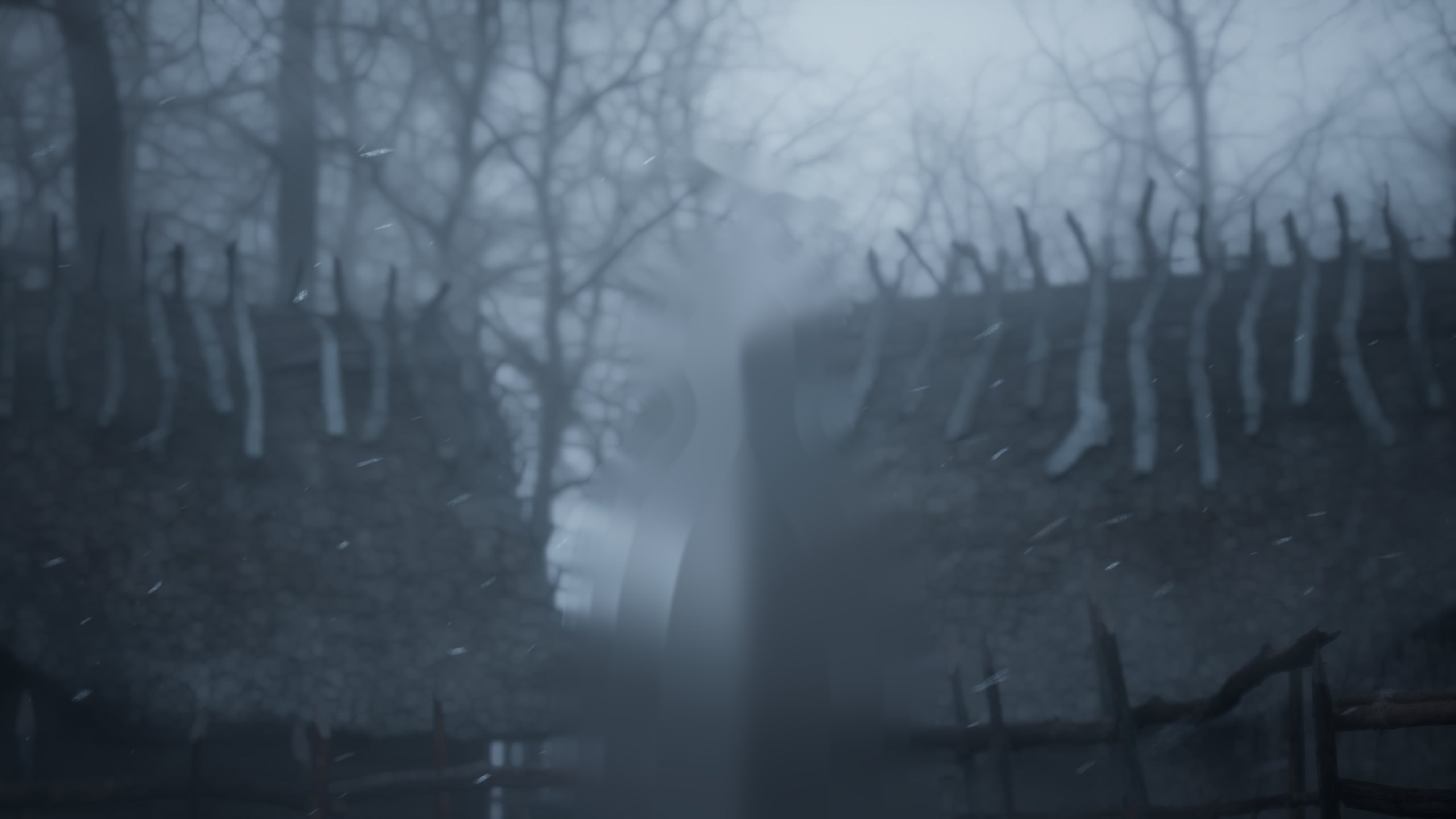
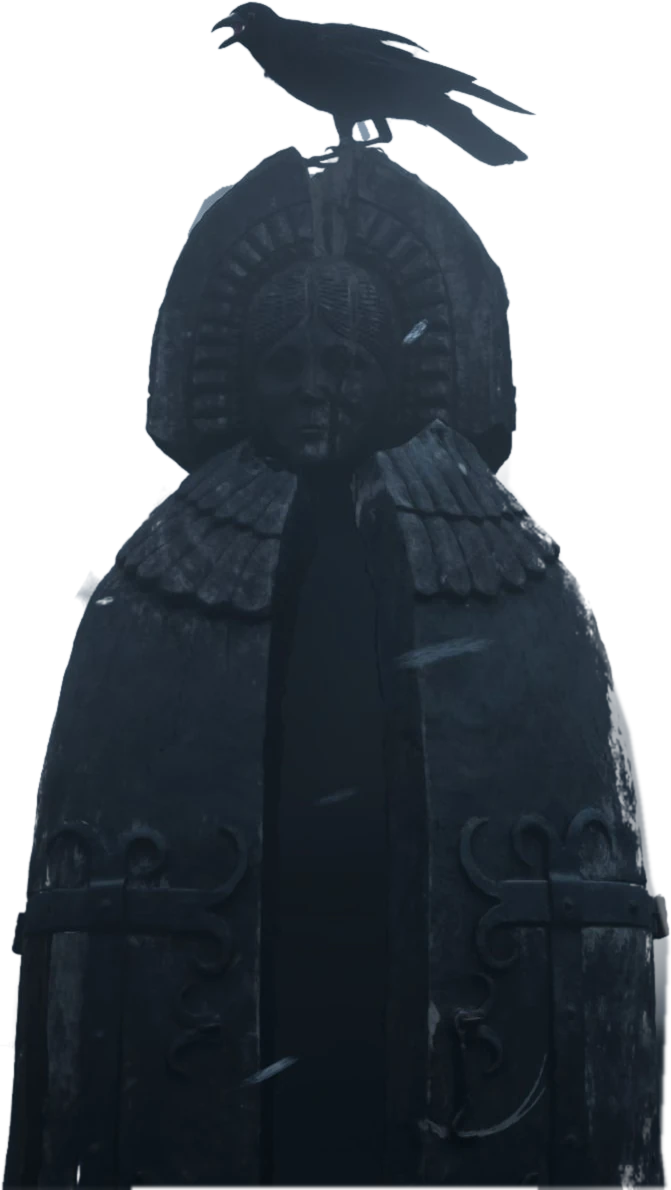

Sword combat captured with Antoni Olbrychski, HEMA world champion in sword fighting.
Attacks are recorded in every direction from every combat stance, so each strike starts from the pose the fighter is actually in. There is no hard lock-on, and opponents choose their strike by predicting where their target is moving.


What sets it apart
Characters do not walk by playing stock animation clips. A machine-learning motion model, trained on original motion capture directed specifically for the game, generates their movement in real time, so starts, stops and turns carry the dynamics of real recorded motion. After a jump, a ragdoll fall or getting up, the model continues from the character's actual current pose.
Sword combat was captured with Antoni Olbrychski, HEMA world champion in sword fighting. Attacks are recorded in every direction from every combat stance, so the system does not need a hard lock-on. More than 400 captured cuts run in the game.
The world is assembled from real landscapes. Elevation comes from public survey data, mostly airborne LiDAR at 1–2 m resolution, from Poland, Great Britain, Norway and Arctic Canada. The world runs on Unreal Engine's mesh-based terrain system.
More than a hundred cave systems are shaped by a model of how water dissolves rock. They are cut directly into the terrain as part of the same world, rather than loaded as separate levels.
Biomes are computed rather than hand-painted. A climate gradient runs from a temperate core of the map to frozen edges; the biome map follows from that climate together with water, ground, slope exposure and the stages of forest growth. Snow follows the same climate.
The world publishes neutral facts, such as rain starting or an alarm being raised. Each character interprets them through its own profile, needs and relationships. No central script tells people how to react, so two villagers can respond to the same event in different ways.
In the press
10countries
covering the game

Featured by NVIDIA at GDC 2026
At GDC 2026 in San Francisco, NVIDIA announced The Vernyhorn among its featured titles and premiered an exclusive trailer of the game. The Vernyhorn will launch with ray tracing and NVIDIA® DLSS 4.5, including Dynamic Multi Frame Generation and Super Resolution.
Read the announcement on nvidia.com- Ray tracing
- NVIDIA DLSS 4.5
- Dynamic Multi Frame Generation
- Super Resolution
 Built into
the engine
Developed with Epic Games engineers
The Vernyhorn is developed by Piotr Tumiłowicz, working closely with engineers at Epic Games. Development reaches into the engine's source code: every engine defect is traced to its root cause, given a minimal local fix and reported to Epic Games. Defects reported from the project have been reproduced by Epic and fixed in the engine source, and each local fix is removed once the official one ships.
- Animation
- Technical exchange with Epic's animation research team on training AnimGen, the engine's machine-learned motion model, on the game's original motion capture.
- Terrain
- Defects found in the Mesh Terrain builder were reproduced and fixed by the team behind Mesh Terrain.
- Characters
- Technical guidance from Epic's MetaHuman engineering on running many MetaHuman characters at once.
